
Avoid SBET & WULF: Crypto Slows in 2025
Bitcoin Stalls in 2025, Impacting SBET and WULF Outlook

The northeastern United States experienced harsh cold weather this month, but a similar chill has descended upon the cryptocurrency sector. Investor sentiment has weakened, and volatile trading patterns are positioning Bitcoin for its poorest annual showing since 2022. What factors are behind this cryptocurrency slowdown in 2025, and should investors anticipate improvement in 2026?
In the following analysis, we examine the reasons digital currencies have struggled throughout 2025 and highlight two crypto-associated firms that investors may wish to steer clear of until Bitcoin regains upward traction.
Crypto Lags Behind Other Assets in 2025
Cryptocurrencies began 2025 with considerable upward momentum, yet the optimistic outlook faded as Bitcoin’s value fluctuated unpredictably. Post the 2024 U.S. Presidential election, Bitcoin’s price climbed from $70,000 to more than $120,000 per token, fueled by expectations of more favorable regulations and heightened risk appetite among investors. Investors have indeed embraced more risk (evident in the consistent buying of market dips this year), but the anticipated regulatory easing has not unfolded as crypto enthusiasts envisioned.
The Trump administration has relaxed certain cryptocurrency trading restrictions, yet overarching regulatory clarity remains elusive. Last summer, the U.S. House of Representatives approved the Clarity Act to define clearer guidelines for digital assets. Nevertheless, the legislation faces slim chances of passing the Senate in its present form, with modifications being drafted by lawmakers on both sides. Senate leaders express optimism for a 2026 vote, though no specific timeline has been set.
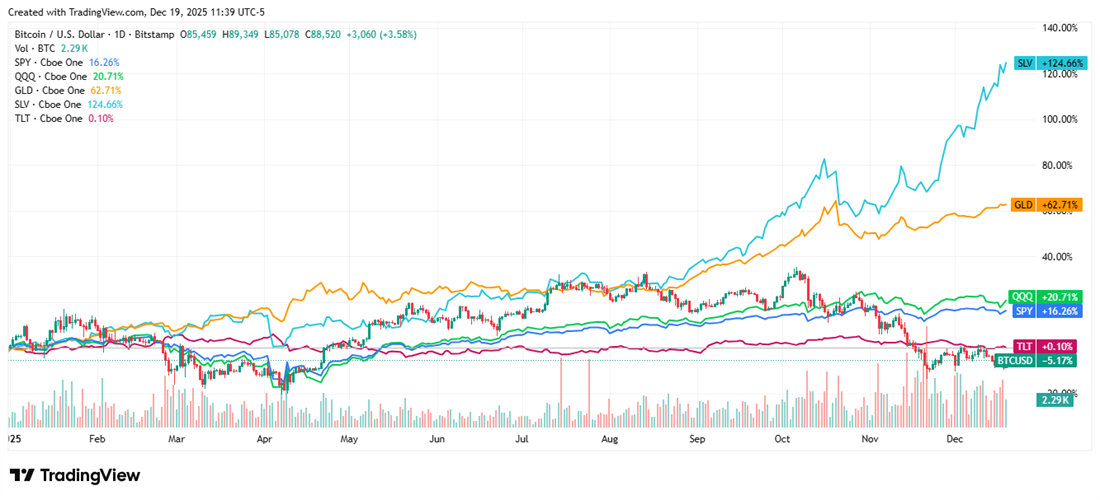
Regulatory hurdles in the U.S. are not the sole issue plaguing crypto markets. Although the current U.S. leadership appears more receptive to digital assets than prior ones, global attitudes vary. The European Union has intensified scrutiny on crypto exchanges and stablecoins, mirroring actions by select Asian authorities. Additionally, cryptocurrency mining and trading continue to face outright prohibitions in China. Digital currencies had started mirroring movements in the broader technology sector, aligning closely with risk-on investments such as AI-related equities. However, recent trends indicate this synchronization has fractured, with Bitcoin now trailing not only equities but also commodities and fixed-income securities.
Two Stocks to Sidestep Amid Crypto Stagnation
With the introduction of Bitcoin and Ethereum exchange-traded funds (ETFs), investors can now access leading cryptocurrencies via conventional investment vehicles. Consequently, equities previously prized for their cryptocurrency linkages—such as mining operations and firms holding substantial digital asset reserves—are seeing diminished appeal.
Two particular stocks emerge as highly susceptible in today’s landscape. Each maintains heavy exposure to cryptocurrencies, and their latest developments point to escalating financial and technical vulnerabilities.
SharpLink Gaming: Valuation and Liquidity Red Flags

SharpLink Gaming (SBET) garnered significant attention earlier this year after the modest gaming and advertising firm executed a complete strategic shift toward cryptocurrencies.
Following the appointment of Ethereum co-founder Joseph Lubin to an executive role, SBET intensified its commitment by transforming into an Ethereum treasury holder, acquiring over $3 billion worth of ETH tokens and staking almost the entirety to generate yields.
This staking strategy has produced unprecedented revenue figures, but the company’s prospects are now inextricably linked to Ethereum’s market price.
Should regulators classify ETH tokens as securities in the coming year, SharpLink Gaming could be compelled to register as an investment entity, incurring substantial compliance expenses and necessitating alterations to its operational framework.
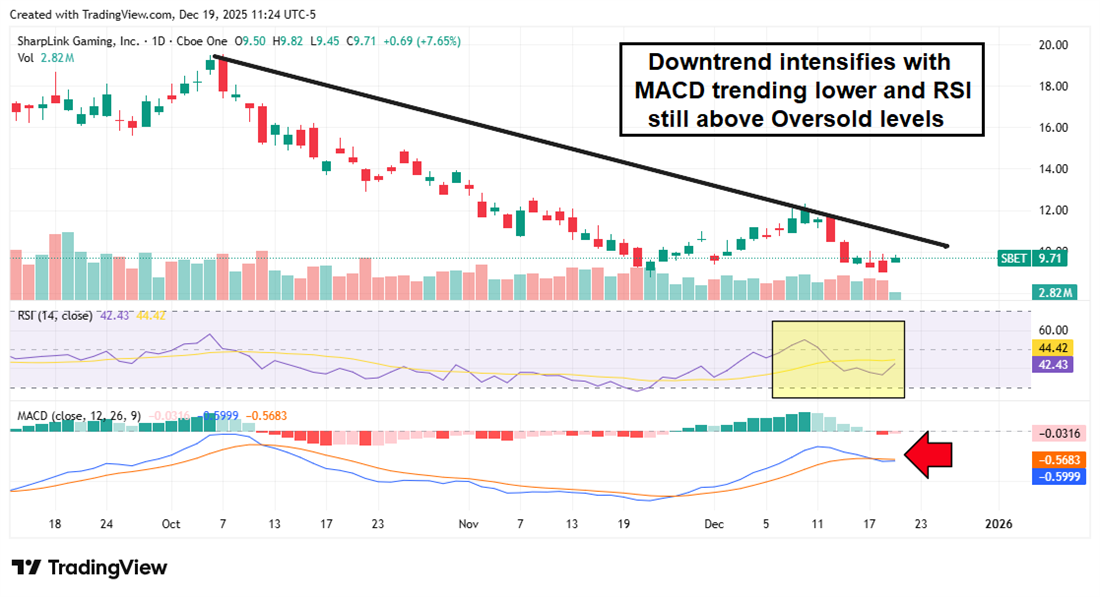
The equity is encountering headwinds from both valuation metrics and technical indicators. Even with peak revenue levels, the firm posted a loss of 63 cents per share during the third quarter of 2025, and its valuation remains elevated notwithstanding the pullback. The Moving Average Convergence Divergence (MACD) has recently signaled a bearish crossover, suggesting potential for accelerated declines ahead.
TeraWulf: Mounting Debt Pressures

TeraWulf (WULF) pursues an admirable objective: establishing itself as the pioneering carbon-neutral cryptocurrency mining operation. One key site, Project Nautilis, operates solely on hydroelectric energy in New York.
TeraWulf additionally provides high-performance computing (HPC) services to data centers, and this diversified revenue mix propelled WULF shares to a 120% gain year-to-date.
Nevertheless, the firm’s aggressive growth relied predominantly on borrowed funds, and debt-related challenges are now emerging prominently.
In 2025, TeraWulf secured approximately $5 billion in debt financing arrangements, pushing total liabilities beyond $1.5 billion. Industry experts caution that this leverage could prove unsustainable amid escalating expenses and liabilities approaching parity with assets.
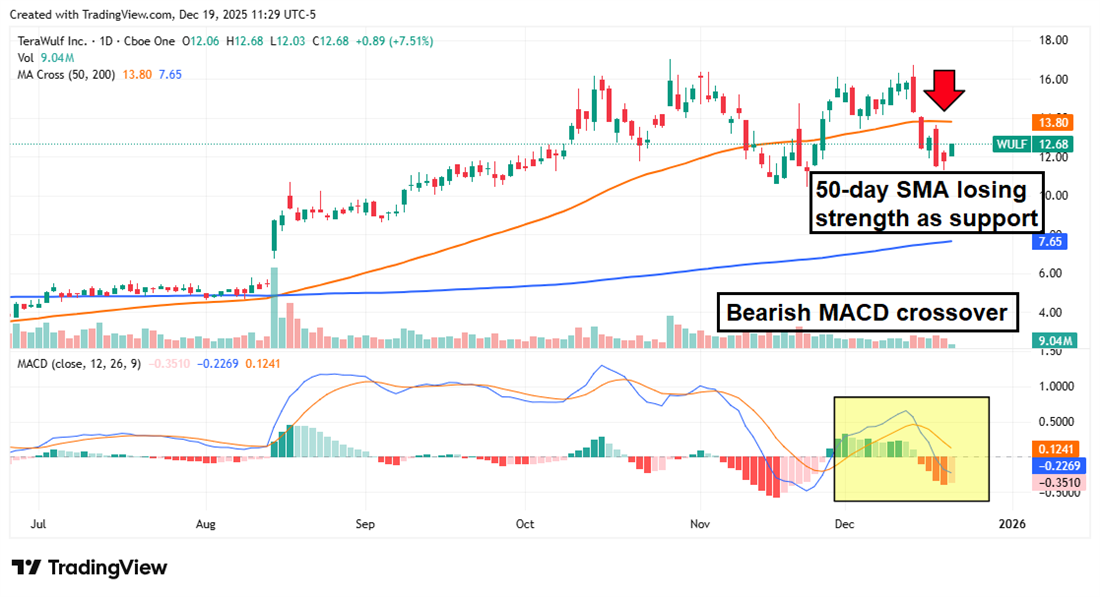
These underlying frailties have manifested in the price chart, where technical resistances now risk pulling the stock lower from recent highs. Critical support near the 50-day simple moving average (SMA) has fractured, reinforced by a bearish MACD crossover. Although TeraWulf has lessened its dependence on Bitcoin revenue alone, a prolonged BTC downturn could exacerbate strains on its expanding debt obligations.
- Bitcoin and leading cryptocurrencies persist in underperforming relative to other asset categories and benchmarks as 2025 draws to a close.
- Absence of definitive U.S. regulatory guidance hampers crypto markets, despite supportive political shifts and investor risk tolerance.
- Crypto-tied equities such as SharpLink Gaming and TeraWulf confront valuation pressures and debt burdens amid fading digital asset vigor.